
Professional Car Scrapping in Hong Kong: Quotes, Towing and Deregistration
Getting rid of an old car is more than asking "how much can I get?". Whether the car is dismantled or resold, whether a tow truck can reach it, how much you actually receive, when you get the certificate and who files TD184 all shape the result. This guide follows the service in order and lists what to ask, prepare and follow up.
Key takeaway: A professional scrap car company in Hong Kong should spell out how the car will be handled, the quote conditions, all fees and the net payout, towing, the vehicle dismantling certificate and who deregisters the car. Compare net amounts, not the biggest headline number.
Six things a proper scrapping service should explain
- Disposal: dismantling and recycling, or second-hand purchase and resale.
- Quote conditions: condition, validity and what still needs checking on site.
- Real amount: purchase price, all fees and expected net payout.
- Towing and handover: access limits, equipment, timing and payment method.
- Dismantling paperwork: who actually dismantles the car and issues the certificate.
- Government steps: who handles deregistration, refunds and plate retention.
"One-stop service" does not mean the owner can ignore everything. Each step should have a named party, documents and a way to follow up.
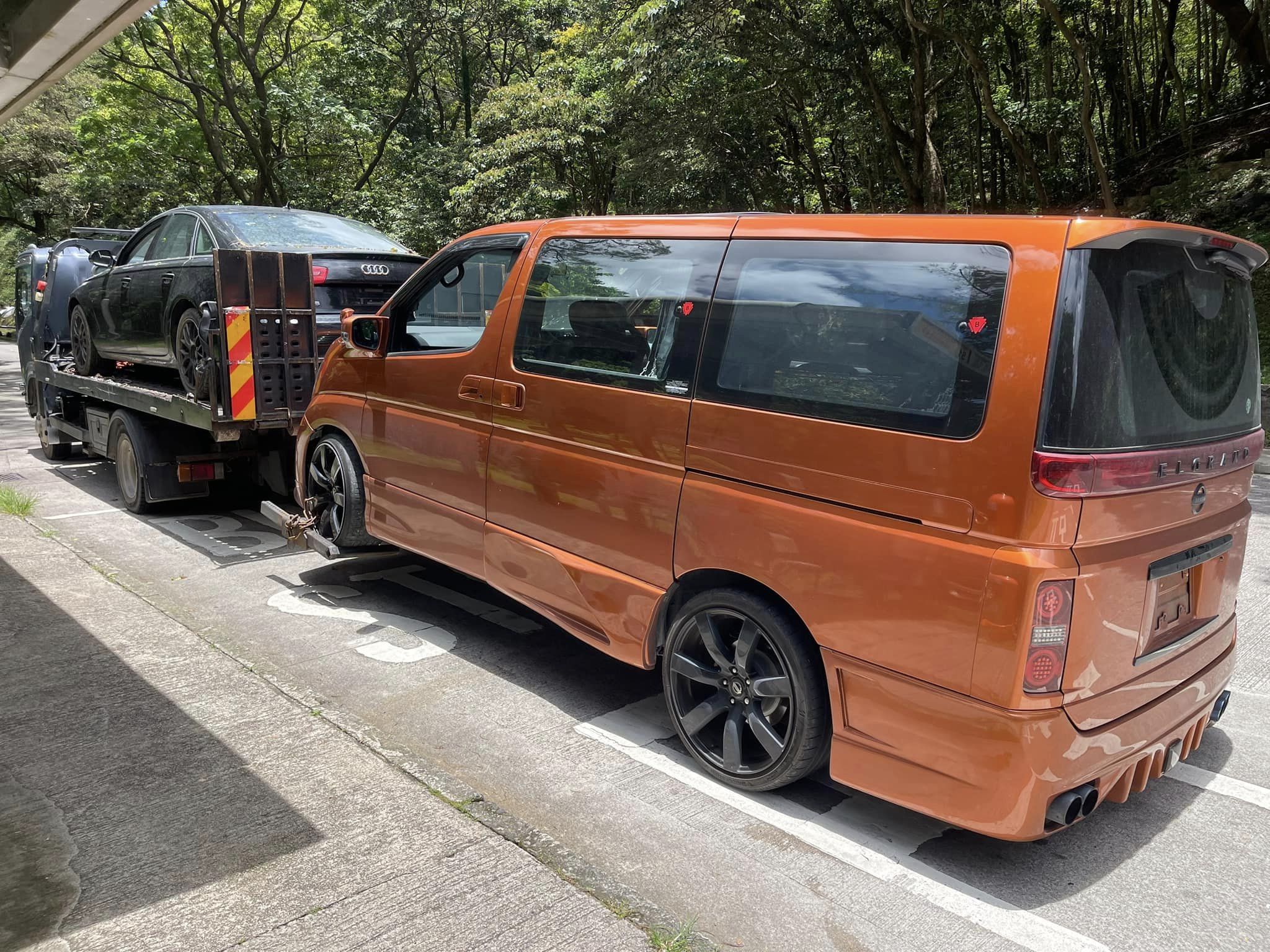
Scrapping is not the same as every "car buying" service
Scrapping means dismantling and recycling the vehicle. A second-hand buyer may resell it, which involves a transfer of ownership rather than dismantling. Repair keeps the car on the road. Compare quotes, repair estimates, time and running costs before you decide.
| Option | When it fits | Check first |
|---|---|---|
| Repair | The car will still meet your needs and be safe | Written estimate, other likely faults, downtime, budget |
| Sell second-hand | There is real resale demand and you accept viewings and transfer | Actual price, payment, transfer and handover duties |
| Scrap | You no longer want the car and want it dismantled properly | Quote, towing, dismantling certificate, deregistration |
| Settle claims or finance first | Insurance, loans or disposal limits still apply | Written confirmation from whoever controls disposal |
"Scrap it once repairs reach 60% of the car's value" is not a rule for everyone. And deregistration does not wipe out existing loans, accident liability, debts or contract disputes.
What to send a scrap car company
Vehicle basics
- Make, model and year
- Vehicle class and power type
- Mileage, or say you're not sure
- Modifications or replaced parts worth checking
Handover details
- Starts, steers, moves?
- Known faults, accident, flood, fire or missing parts
- Location, height limit and release conditions
- Documents complete? Preferred date?
Send photos from several angles, the interior, the odometer and any damage, and list major missing parts. If you don't know whether the car starts today, say "unconfirmed". Verify the contact channel before sharing sensitive documents: a rough quote, formal ID checks and government filings are separate stages. Don't dismantle, jump-start or repeatedly crank a badly damaged car to push up the quote.
Different vehicles and conditions need different arrangements
Private cars, vans, trucks, motorcycles and EVs differ in size, towing method and handling. This checklist is not a promise that Pak Lam accepts every vehicle unconditionally.
| Condition or type | Tell us | Confirm before service |
|---|---|---|
| Normal, movable car | Model, year, condition, location | Disposal method, quote and handover time |
| Long-parked or dead car | How long parked, last start attempt, wheel condition | Equipment needed, safe moving |
| Accident damage | Damage photos, location, claim and release status | Insurance or investigation requirements settled |
| Flood or fire damage | Known incidents and danger signs; don't guess the extent | Safety assessment, moving and acceptance |
| Electric or hybrid | Model, known battery issues, incidents | Whether the handler has the right capability |
| Large or commercial vehicle | Class, size, weight and load | Towing capacity, site and whether the quote applies |
| Parts already removed | List and photos of missing parts | Quote based on the stripped state, not a complete-car price |
See our services and confirm your case and schedule with the team.
Why scrap car quotes differ
| Factor | How to read it | Don't assume |
|---|---|---|
| Model and parts demand | Different models and parts have different demand | Japanese cars always pay more, European cars less |
| Age and mileage | Background, read together with condition | Low mileage always means good parts |
| Major parts | Engine, gearbox and battery condition matter | Each part adds or removes a fixed sum |
| Faults and accidents | Affect usability, risk and handling | A dead car has no value |
| Towing and site | Affect whether the plan works and what equipment is needed | Same district, same towing fee |
| Validity and conditions | How long the price holds and what is left to check | Metal prices can overturn an agreed deal |
Weight times metal price is not the car's price: not all of it is the same saleable metal, and dismantling, sorting and transport cost money. If major undisclosed missing parts turn up, a re-assessment can be fair, but a disclosed problem should not be deducted again.
Compare the net payout, not the biggest number
Expected net = confirmed price − fees you agreed to pay. Don't treat towing, inspection or agency fees as zero until confirmed.
| Item | Offer A | Offer B | Offer C |
|---|---|---|---|
| Quote | HK$8,500 | HK$8,000 | HK$9,000 |
| Agreed fees | HK$800 | HK$0 | Not stated |
| Expected net | HK$7,700 | HK$8,000 | Unconfirmed |
| Payment | Verified at handover | Verified at handover | After towing |
| Paperwork | Stated | Stated | "One-stop" only |
Offer C cannot rank first just for HK$9,000; ask for the missing conditions. If everything else is equal, B pays more net than A. For more, read choosing a scrap car company and our scrap car price guide.
Door-to-door does not mean any spot can be towed directly
- Basement car park: height limit, floor, ramps, entrances and photos.
- Locked wheels: which wheels, can it steer? Confirm method and cost.
- Garage or pound: who releases it, opening hours and unpaid charges.
- Roadside or narrow spot: exact location and road conditions.
- Remote locations: route and restrictions; don't assume there are no exceptions.
If towing is free, confirm it covers your location and condition. Don't drive an unsafe or unlicensed car to save time. See our scrap car process.
The full scrapping process, from enquiry to follow-up
- Decide the goal and confirm disposal rights: scrap or sell; check any finance, claim, custody or investigation limits first.
- Send condition and location details: include known missing parts and faults, and mark anything unconfirmed.
- Get the quote and confirm the scope: separate an estimate from a deal price; confirm fees, net amount, payment, towing and paperwork.
- Book and clear the car: confirm who comes, when and who releases the car; remove belongings, memory cards and account data.
- Check on site and confirm payment: compare the car, condition and final amount; any change must be explained and agreed first.
- Hand over and record: keep receipts, document handover and the dismantling company's details.
- Get the certificate and deregister: submit or post documents within the official 15-day guidance; keep tracking details if an agent files them.
- Refunds, plate and other accounts: handle licence refunds by eligibility, and insurance, parking and toll accounts by their own procedures.
This is the order of service, not a guaranteed timeline. Replying, towing, dismantling, certification and government applications are separate stages, so don't expect "everything done the same day".
Check the amount before handover and confirm it has arrived
- Cash: count it in person and keep a receipt.
- Transfer: check your account through your own bank's official app.
- Deferred payment: don't be pushed into terms you never agreed.
- Record the vehicle, buyer name, final amount, date, documents handed over and who follows up on the certificate and deregistration.
A screenshot of a transfer is not money in your account. Never give out banking passwords or one-time codes, and don't sign "paid in full" before you are. To spot impostors and payment scams, read avoid scrap car scams.
Certificate, receipt and TD184 are different documents
The Transport Department (TD) requires you to obtain a vehicle dismantling certificate, commonly called lau che zhi (劏車紙), from the recycling company and make sure its business registration number is on it. A payment receipt is not a dismantling certificate, and the handover date is not necessarily the dismantling date.
After properly disposing of the vehicle, the owner should submit or post the required documents to a TD licensing office within 15 days to cancel the registration. Otherwise the owner remains liable for everything arising from the vehicle.
- Vehicle registration document (log book) original
- Vehicle licence original, if still valid
- Dismantling certificate original
- Owner ID: HKID, passport for non-residents, or certificate of incorporation
- For an agent: copy of owner ID plus the agent's HKID original
- Personalised registration mark certificate original, if applicable
- Completed TD184
If the log book is lost, apply for a duplicate with TD151 at a licensing office, in person or through an authorised agent.
Licence refunds and keeping your plate number
TD refunds the unexpired licence fee at annual fee × 0.24% × remaining valid days, provided 60 days or more remain; under 60 days there is no refund. Exactly 60 days qualifies. Keep the government refund separate from the buyer's payment when comparing offers, and don't count on a fixed arrival time.
To keep the registration mark, submit TD129 at the Hong Kong or Kowloon Licensing Office after the car is dismantled; the mark is reserved for 12 months. If it is not assigned to another vehicle in time, the Commissioner may cancel it. Retention is a government application, not just keeping the metal plates.
One-for-One ended on 31 March 2026
Electric private cars ordered on or before 25 February 2026, or shipped to Hong Kong by the owner for own use, that could not be first registered before 1 April 2026 may be handled under a one-off arrangement after the distributor, importer or owner submits proof and TD approves. Applications must be made by 24 February 2027, and first registration completed by 24 February 2027 or within 5 working days of approval, whichever is later.
| Date or condition | Key point |
|---|---|
| 31 March 2026 | The general EV concession and One-for-One scheme ended |
| On or before 25 February 2026 | Cars ordered, or shipped for own use, in specified cases; proof and verification required |
| On or before 24 February 2027 | Applications under the one-off arrangement must be submitted |
| First registration | By 24 February 2027 or within 5 working days of approval, whichever is later |
Old-car, new-car, ownership and date requirements still apply. A dismantling certificate is not a tradeable tax quota. Check with TD and the registered distributor before deciding when to scrap; a scrap company can explain paperwork but cannot grant approval.
Loans, claims, company cars and damaged EV batteries
- Finance outstanding: confirm disposal rights and settlement with the lender first.
- Insurance claim or total loss: confirm inspection, salvage and disposal with the insurer.
- Limited company or fleet: verify the signatory, company documents, vehicle list and payee.
- Investigation or seizure: check with the authorities or your lawyer before anything is removed.
- EVs: declare battery, collision and flood history; never work on high-voltage parts yourself.
- Accessories: if you want to keep a dashcam, audio or wheels, say so before the quote.
Ask where materials actually go
Cars contain metal, reusable parts, tyres, batteries and fluids. Environmental Protection Department (EPD) guidance for vehicle repair workshops says chemical waste should be sorted, contained, labelled and stored properly and collected by licensed collectors. Ask three things: which company and site actually dismantles the car, how fluids and batteries are handled, and who issues the certificate. We don't advertise unverified 75% or 80% recycling rates.
Seven things to follow up after you are paid
- Dismantling certificate: check company, business registration number and vehicle details.
- Deregistration: file within the official deadline; get trackable details from any agent.
- Licence refund: handled by TD by remaining days.
- Plate retention: TD129 if needed; note the deadline.
- Insurance: ask your insurer about cancellation and refunds.
- Parking and toll services: cancel monthly parking, tags and auto-payments.
- Records: keep quotes, receipts, payment proof and filings.
Send your car's real condition for a suitable quote
Call or WhatsApp 6799 5101 with the make, model, year, condition, location and any finance or claims, and we will confirm the quote conditions, towing, payment and paperwork.
Enquiry you can copy
Hello, I'd like a scrapping quote from Pak Lam:
Make / model / year: __
Vehicle class and power type: __
Mileage, and whether it starts and moves: __
Known faults, damage or missing parts: __
Location, height limit and release restrictions: __
Documents complete: __
Any finance, claims or other restrictions: __
Preferred handover date: __; keeping the plate number: __
Please confirm the quote stage, all fees, expected net amount, payment method, who dismantles the car, and the certificate and TD184 arrangements.
Service scope, schedule and fees are confirmed case by case. See about us and contact us.
Car scrapping service: 8 common questions
What is the difference between scrapping and selling to a used-car buyer?
Scrapping means the car is dismantled and recycled; a used-car buyer may resell it and transfer ownership. Confirm which one you are getting, not just the words "we buy cars".
How should I compare high scrap car offers?
Ask every company using the same condition details and scope, subtract agreed fees from the confirmed price, then compare payment timing, the dismantling certificate and who handles deregistration.
Must I repair a dead car before asking for a quote?
No. Say it doesn't start and list known problems, then confirm the company's acceptance terms. Don't attempt risky repairs just for a quote.
Can a car in a basement or a dead car be towed?
It depends on the site. Give the height limit, ramps, whether the wheels turn and release arrangements, then confirm equipment, fees and schedule.
Does a receipt mean the car is dismantled and deregistered?
No. The payment receipt, handover, dismantling certificate and deregistration are separate, and each needs checking.
Can I get a licence refund with exactly 60 days left?
Yes, TD requires 60 days or more, not more than 60. The refund is annual fee × 0.24% × remaining days, calculated by TD.
Can I scrap a car that still has a loan?
Confirm disposal rights, settlement and documents with the lender first. Don't rely on whether the log book shows a particular note.
Does deregistration clear all my responsibilities?
No. It does not clear existing loans, accident liability, debts or contract disputes, and it does not cancel your insurance, parking or other services.
Questions about certificates, deadlines, price lists and One-for-One are answered in our car scrapping FAQ.
Procedures, refunds and policy (Chinese pages)
- Transport Department: cancelling the registration of disposed vehicles
- Transport Department: vehicle licensing and registration FAQ
- Transport Department: first registration tax concessions for EVs
Updated 15 October 2026. General information only, not legal, insurance, tax or financial advice. Check the latest official sources before applying; actual quotes and services are as agreed by both parties.