
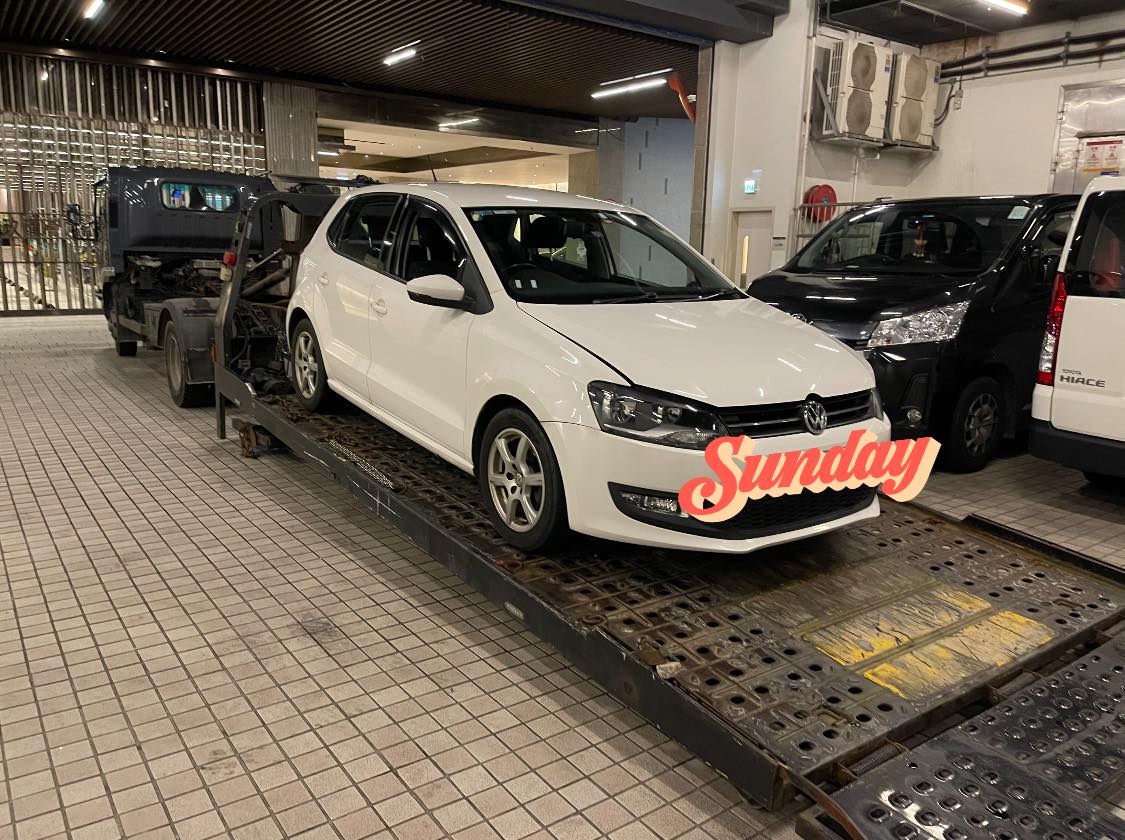
Hong Kong has one of the highest vehicle densities in the world, and car owners regularly need a way to dispose of old vehicles. Whether your car is ageing, too expensive to repair, or you are preparing to buy a new one, choosing the right scrap car company in Hong Kong is an important decision. This guide covers every stage: getting a quote, comparing the amount you actually receive, the handover, and cancelling the vehicle registration.
Key takeaway: A high-price car scrapping deal is about the net amount you receive, not the highest phone quote. Give several companies the same details, confirm fees in writing, get paid in full at handover, check the business registration number on the vehicle dismantling certificate, and cancel the registration on time.
What is car scrapping? The Hong Kong industry explained
Car scrapping (vehicle dismantling) means a company takes an unwanted vehicle apart, removes and sorts valuable parts, and resells them locally or exports them to markets such as Southeast Asia, the Middle East and East Africa. The remaining shell is recycled as scrap metal. It is an environmentally responsible way to dispose of a car and a legal way for owners to realise its remaining value.
A scrap quote is essentially what the company estimates the reusable parts and metal are worth, minus the costs of towing, dismantling and handling chemical waste. In other words, it reflects what the car is worth taken apart, not what it could sell for as a used car.
Scrapping vs selling as a used car
If your car is in good condition, fairly new and holds its value, selling it as a used car usually earns more. If it is older, costly to repair or in low demand, or you want a quick sale without the hassle of advertising and viewings, scrapping is often the better choice.
Many adverts say "we buy cars at high prices", but that does not tell you what happens next. Always ask whether the car will be resold (transferred) or scrapped, because your legal responsibility ends at different points.
| Comparison | Car buy-back (resale) | Car scrapping |
|---|---|---|
| Outcome | Ownership transferred; car stays on the road in Hong Kong or overseas | Car dismantled; registration cancelled |
| Value based on | Used-car demand, condition, mileage | Parts demand, metal weight, special equipment |
| Suits | Good condition, popular models | Old, broken-down, accident or flood-damaged cars |
| Documents | Transfer of ownership | Dismantling certificate and TD184 cancellation |
| Your liability ends | When the transfer is complete | When the registration is cancelled |
| Licence refund / keeping the plate | Licence and plate go with the car | Can apply under Transport Department rules |
How to choose a reliable scrap car company
The market has many providers of varying quality, and some dishonest operators take advantage of owners who are unfamiliar with the process. Use the checks below.
Check who issues the dismantling certificate
The vehicle dismantling certificate, commonly called lau che zhi (劏車紙), is issued by the vehicle recycling company that dismantles the car, not by the government. You need it to cancel the registration with the Transport Department (TD). The TD asks owners to make sure the recycling company's business registration number is shown on the certificate.
Many owners believe the company must be a "registered vehicle dismantler" with the Environmental Protection Department (EPD). The EPD list mainly relates to the ex-gratia payment scheme for phasing out Euro IV diesel commercial vehicles. For an ordinary private car, the key check is the business registration number and company details on the certificate. A business registration does not prove every site, environmental or high-voltage capability, so ask separately about battery or special-vehicle handling.
Verify a physical scrapyard address
A reliable company has a real scrapyard and welcomes visits. A business that cannot give an address may be a middleman who resells your car to a real scrapyard and keeps the difference, so you will not get the best price.
Transparency, towing and handover
A professional company explains its quoting method, handover, documents and payment clearly. Most offer free towing; if a company asks you to arrange towing or charges extra, confirm this in advance. Tell them whether the car runs and where it is parked so they can arrange a suitable handover.
Sign proper documents and get paid on the spot
A proper deal includes signing the TD's TD184 form (Notification of Cancellation of Vehicle Registration) and immediate payment. You should receive an official receipt and the dismantling certificate, showing the date, company chop and business registration number. Never hand over your vehicle registration document before the handover; insist on handing over the car and receiving the money at the same time.
Know who is trading, towing and dismantling
| Role | What to check |
|---|---|
| Quoting / trading company | Company name, contact person, confirmed terms |
| Towing operator | Whether appointed by the trading company; destination and contact |
| Actual dismantler | Name, location, certificate and business registration number |
| Document agent | Scope of authority, documents received, follow-up method |
What drives a high scrap car price?
There is no fixed price list; each car is assessed individually.
- Make and model: mainstream brands such as Toyota, Honda and Mercedes-Benz have strong parts demand locally and overseas. A luxury badge alone does not guarantee a high quote. Larger vehicles such as SUVs, vans and lorries contain more metal and parts.
- Age and mileage: newer, lower-mileage cars usually have more valuable engines and gearboxes, but there is no single year or mileage cut-off.
- Running condition: a car that starts lets the scrapyard test the engine, gearbox and electronics on the spot; a non-runner is valued on metal and confirmed usable parts.
- Bodywork: intact panels, lights and interior add value; major accident history lowers it.
- Licence days remaining: under TD rules, a partial licence fee refund is available only if at least 60 days remain, calculated as annual licence fee × 0.24% × remaining days. For example, a $5,000 annual fee with 180 days left returns $2,160. This refund comes from the TD, not the scrap company.
- Market demand and metal prices: scrap metal prices and overseas parts demand move quotes, but you cannot simply multiply the car's weight by an online metal price.
- Special equipment and parking location: tail lifts, cranes and refrigeration units can be valued separately; basements, height limits and remote sites affect towing cost.
How to get an accurate quote
Before you ask
- Find the vehicle registration document: class, first registration date, weight and chassis number.
- Check the licence expiry date: an expired car cannot be driven and must be towed.
- Check for outstanding hire-purchase or loans and settle them with the finance company.
- Decide whether to keep your plate number: submit form TD129 together with the cancellation.
- Do not remove parts: missing engines, gearboxes, batteries, catalytic converters or tyres reduce the quote.
Eight photos plus a start-up video
| Photo | How | What the company checks |
|---|---|---|
| 1–2. Front and rear | Straight on, including plates | Damage, lights, bumpers, tailgate |
| 3–4. Both sides | Stand back to capture the whole car | Dents, rust, door edges, tyres |
| 5. Dashboard | Ignition on, with warning lights | Mileage, engine and battery warnings |
| 6. Engine bay | Bonnet open | Engine, battery, missing parts, leaks |
| 7. Registration document | Clearly legible | Class, first registration date, weight, model |
| 8. Damage close-ups | One per damaged area | Avoids "surprises" on site |
| Start-up video | 10–20 seconds, dashboard and engine sound | Shows the engine runs |
Stay safe: do not photograph in traffic, crawl under an unsupported car, or touch high-voltage parts. Do not try to start a flooded or battery-damaged vehicle just to film it.
What a complete quote should state
| Item | Should say |
|---|---|
| Amount | A definite figure, not "about" or "depends" |
| Conditions | Based on your photos and description |
| Validity | For example, 7 days |
| Fees | Towing, handling and agency fees: zero or how much |
| Payment | Full payment in cash or transfer at handover |
| Certificate | Issued by which company, when, with business registration number |
| Cancellation | Who submits TD184 and when |
Compare the net amount, not the headline quote
Use two separate formulas:
- Net amount from the deal = purchase price − fees you agreed to pay
- Overall result = net amount + approved refunds − other costs actually paid
Licence refunds, insurance refunds and plate retention fees each have their own conditions and are not part of the company's quote. The figures below are purely hypothetical, to show the calculation; they are not market prices or Pak Lam quotes.
| Item | Company A | Company B | Company C |
|---|---|---|---|
| Phone / WhatsApp quote | $9,000 | $7,500 | $7,000 |
| Towing fee | −$800 | $0 | $0 |
| Handling / agency fee | −$500 | −$300 | $0 |
| On-site deduction | −$2,000 | $0 | $0 |
| Net amount | $5,700 | $7,200 | $7,000 |
| Quote confirmed in writing | No | Yes | Yes |
| Full payment at handover | "Later" | Yes | Yes |
| TD184 handled | Owner does it | Charged | Free |
The highest quote (A) pays the least. To negotiate fairly, add genuine information (such as unlisted equipment) rather than exaggerating, compare offers on the same terms, and do not spend money on cosmetic repairs just to raise a scrap price.
Step-by-step scrapping process
For full details, see our scrap car process page.
- Decide whether to scrap. Consider repair costs, resale prospects, time, cash needs and expected future repairs. No fixed percentage rule fits every car.
- Request quotes with the same details and photos from several companies.
- Confirm the quote and book the handover: drive to the scrapyard (only if the car is safe and legal to drive), meet at an agreed location, or use a free door-to-door collection. Check car park access, height limits and management rules first.
- Clear personal items: toll tags, fuel cards, car park cards, dashcams and items in the glovebox, under seats and in the boot. Erase infotainment data; EV owners should remove the car from the brand app.
- Handover: bring the registration document, vehicle licence, ID card and all keys. Staff check the plate, chassis and engine numbers, then pay you and issue a receipt and the dismantling certificate. Check every detail on the certificate and confirm any bank transfer has arrived.
- Cancel the registration: TD guidance requires the owner to submit or post the required documents to a TD licensing office within 15 days of disposing of the vehicle; until then, the registered owner remains liable for the vehicle. Documents include the registration document, valid licence (if any), dismantling certificate, proof of identity (a certificate of incorporation for companies) and a completed TD184. Do not use correction fluid on any form.
- Licence refund and plate retention: eligible refunds are posted by cheque. Retaining a plate number with TD129 costs $560, and the number must be assigned to another vehicle in your name within 12 months.
The One-for-One scheme has ended
The electric private car One-for-One Replacement Scheme was launched on 28 February 2018 and ended after 31 March 2026. A one-off arrangement covers eligible electric private cars ordered on or before 25 February 2026, with applications due by 24 February 2027 and subject to TD approval. The old car's registration must be cancelled no later than the new car's first registration application, and no more than three months apart. A scrap company cannot guarantee the concession, and there has never been a TD "quota" transfer system, so ignore any quote that includes a "quota price". See One-for-One scheme ended.
Scrap car price ranges by vehicle type
These ranges come from industry sources and are for general reference only.
- Private cars: roughly $3,000–5,000 for poor, non-running cars; $11,000–20,000 for average cars; $21,000–42,000 or more for good, popular models.
- Lorries: around $25,000 on average, $40,000–50,000 for better examples, and $70,000 or more for large or excellent trucks. Value comes from metal weight and special equipment. See our truck scrapping guide.
- Motorcycles: usually lower than cars, depending on brand, model, engine size and condition.
| Vehicle | Main value | Mention when asking |
|---|---|---|
| MPV / 7-seater | Heavier body, steady parts demand, seats, power sliding doors | Seat and door condition; private or commercial use |
| Van | Engine, gearbox and body parts | Company or private; tail lift, racks; rust |
| Electric vehicle | High-voltage battery (biggest value and biggest unknown) | Dashboard photo incl. battery warnings |
| Hybrid | Engine plus hybrid battery | Battery warning light |
| Accident / flooded | Undamaged parts and metal | Damage close-ups, water level, insurance claim status |
| Long-parked / non-runner | Metal; untested engine and gearbox | How long parked, access, height limits |
Do not charge or start a flooded or crash-damaged EV, and never remove a high-voltage battery yourself; see our EV scrapping guide. Since 22 December 2025, the TD sends notices to owners of vehicles unlicensed for two years or more, who must relicense within three months or scrap the car and submit TD184.
Common scams and how to avoid them
- Price talk, no paperwork: the car is resold instead of scrapped and you remain the registered owner. Insist on the certificate at handover.
- Middlemen: ask for the scrapyard address and who issues the certificate.
- High quote, then a cut on site: send full photos, confirm in writing, and walk away before handover if the condition matches but the price drops.
- Hidden fees or deposits: the company pays you, not the other way round.
- No formal documents: stop the deal if TD184, the certificate or a receipt is refused.
- "Quota price" and pressure to sign today: genuine quotes have a validity period. If you suspect fraud, call the Anti-Scam Helpline 18222.
More tactics are covered in how to avoid scrap car scams.
What happens at the scrapyard
The car is logged and its chassis number photographed, fluids such as oil, brake fluid and refrigerant are drained and handled properly, valuable parts are removed and sorted, and the shell is compressed or cut for metal recycling. Good parts are sold to local garages or exported; the rest is sold as scrap metal. EV batteries need special care to avoid short circuits or fire.
How Pak Lam quotes
Pak Lam Car Scrapping was founded in 2011 and runs its own scrapyard and tow trucks at Chuen Lung Village, Route Twisk, Tsuen Wan. Our promise: the price quoted by phone is the price paid on site.
| Item | Pak Lam arrangement |
|---|---|
| Quote | Send photos via WhatsApp 6799 5101; reference quote usually within minutes |
| Validity | 7 days, provided the condition matches |
| Fees | Quote, on-site assessment, towing and certificate are free |
| Payment | Full payment in cash or by transfer at handover |
| Documents | Certificate shows our business registration number; free TD184 handling since 1 January 2025; no agency fee for TD129 (TD's $560 fee extra) |
| Collection | New Territories and Kowloon usually within 24 hours; Hong Kong Island 24–48 hours; outlying islands 48–72 hours |
See our services for the vehicle types we accept.
High-price car scrapping FAQ
For general questions on documents, refunds and plates, see our car scrapping FAQ.
What is the difference between "car buy-back" and "car scrapping"?
A buy-back may mean resale or scrapping; scrapping means the car is dismantled and its registration cancelled. Ask which applies: with a resale your liability ends after the transfer, with scrapping you need the dismantling certificate and a cancellation with the TD.
Is the company with the highest phone quote always the best?
No. Compare the net amount under the same conditions (quote minus towing, handling and on-site deductions), plus written confirmation, full payment at handover and who issues the certificate.
A quote is just one number. What else should I ask?
Ask what condition it assumes, how long it is valid, any towing or agency fees, payment method and timing, which company issues the certificate with its business registration number, and who submits TD184.
Why do scrap prices differ so much between vehicle types?
Companies value parts and metal. Private cars depend on local parts demand, lorries on metal weight and equipment, and EVs on battery condition. For all types, whether it starts, whether major parts are present and any accident or flood damage matter most.
Will I earn more by removing parts and selling them myself?
Usually not. Missing engines, gearboxes, batteries, catalytic converters or tyres lower the quote, and selling parts yourself has its own costs and safety risks. Hand the car over as it is.
Are accident or flood-damaged cars still worth anything?
Yes. Undamaged parts and metal still have value. Provide close-ups and the water level, and if an insurance claim is involved, check with your insurer before scrapping.
Can a scrap company guarantee One-for-One approval?
No. Only the TD approves the one-off arrangement and the first registration tax concession. Confirm eligibility and timing with your car dealer before scrapping the old car.
Disclaimer: This article is general information, not legal or financial advice. Scrap prices vary with condition and market; price ranges and comparison figures are for reference or illustration only. Government rules may change; always check the latest official announcements.